On the far side of Malta’s Grand Harbour, away from the cruise ship terminals and the souvenir shops, three fortified peninsulas jut into the water like fingers reaching for Valletta. These are the Three Cities — Birgu, Bormla, and Senglea — and they are where Malta’s story begins in earnest. The Knights of St John built their first stronghold here. The Great Siege of 1565 was fought from these walls. The British Royal Navy made these creeks its Mediterranean headquarters. And through all of it, ordinary Maltese families lived in the limestone streets behind the bastions, raising children, running shops, and hanging laundry between the balconies.
Today the Three Cities remain largely residential. There are restaurants and museums, a marina and a handful of boutique hotels, but the dominant sound is still church bells and neighbours calling across the street in Maltese. Most visitors to Malta spend their time in Valletta, Sliema, or St Julian’s. The ones who cross the harbour and walk these streets tend to come back. This guide is for anyone considering that crossing — whether for an afternoon or a week.
A history written in limestone and cannon fire
The three peninsulas have been inhabited for thousands of years — archaeological evidence near Bormla suggests settlement as far back as the Bronze Age — but the story that shaped them into what they are today begins in 1530, when the Knights of the Order of St John arrived in Malta. Expelled from Rhodes by the Ottoman Sultan Suleiman the Magnificent, the Knights needed a new base. They chose the peninsula then called Birgu, with its natural harbour and defensible position, and made Fort St Angelo their headquarters.
For thirty-five years, the Knights fortified Birgu and the adjacent peninsula of Senglea. They built walls, bastions, watchtowers, and a chain across Dockyard Creek. It was not enough. In May 1565, an Ottoman force of roughly 40,000 men landed on Malta. What followed — the Great Siege — lasted four months and killed thousands on both sides. The Turks battered Fort St Angelo and Fort St Michael (on Senglea) relentlessly, but the Knights and the Maltese population held. A relief force from Sicily arrived in September, and the Ottomans withdrew.
The siege changed everything. Grand Master Jean de Valette — who had led the defence — decided that Birgu and Senglea were too exposed. He commissioned a new fortified city on the peninsula across the harbour: Valletta. The Knights moved their headquarters there in 1571, but the Three Cities did not empty. Birgu became the Inquisitor’s seat. Bormla grew around the dockyard. The massive Cottonera Lines — an outer ring of fortifications enclosing all three cities — were begun in 1670 to protect the civilian population that the Knights depended on.
Under British rule from 1800 onwards, the Three Cities became the heart of Malta’s naval industry. The Royal Navy dockyard in French Creek and Dockyard Creek employed thousands of Maltese workers. English street names in Bormla — Scottish Alley, Irish Street, Hanover Street — date from this period. The military presence made the Three Cities a prime target during the Second World War. Between 1940 and 1943, Malta endured one of the most sustained bombing campaigns in history. Bormla, sitting directly above the dockyard, was devastated. Entire streets were flattened. The population sheltered in tunnels cut deep into the rock beneath the town — some of these shelters can still be visited today.
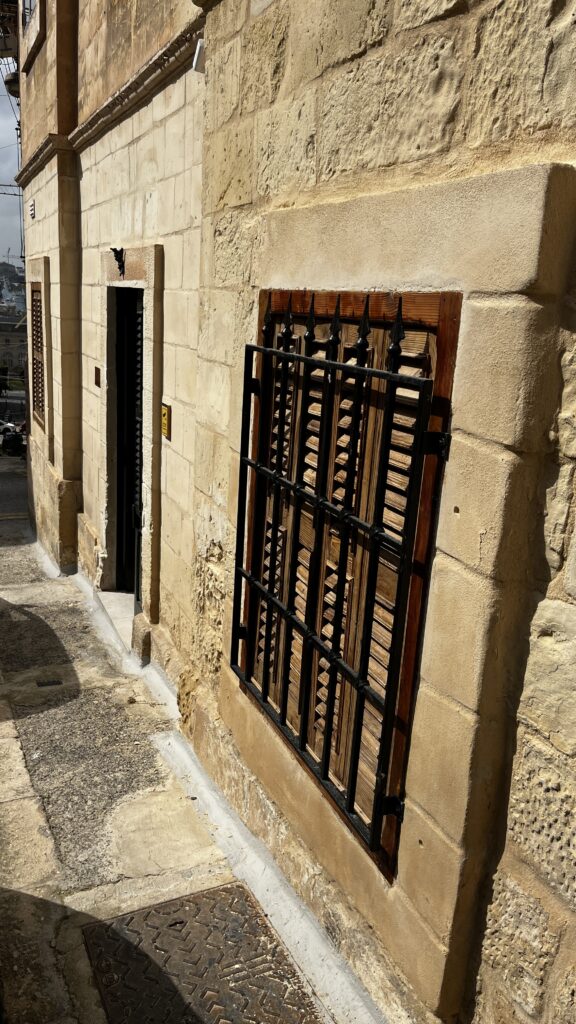
Post-war reconstruction was functional rather than beautiful. Many of Bormla’s replacement buildings are plain concrete, which is why the surviving pre-war streets — with their limestone facades, carved balconies, and baroque doorways — feel so striking by contrast. In recent decades, restoration has accelerated. Fort St Angelo has been fully restored and opened to visitors. Birgu’s waterfront has been redeveloped. And in the quieter streets of all three towns, individual houses are being brought back to life — including Magdalena, a traditional townhouse on Triq Il-Gendus in Bormla, restored with its original stonework, timber beams, and encaustic tile floors intact.

Birgu (Vittoriosa)
Birgu is the most visited of the Three Cities, and the most polished. Its official name — Vittoriosa, “the Victorious” — was given after the Great Siege, and the town has traded on that reputation ever since. The peninsula narrows to a point at Fort St Angelo, which sits like a ship’s prow over the harbour mouth. The fort has been restored by Heritage Malta and is open daily. Walk the ramparts and you look straight across to Valletta’s bastions — the same view the Knights had when they decided to build a new capital on the other side.
Behind the fort, the Collachio is the medieval quarter where the Knights’ auberges (national lodges) once stood. The streets here are exceptionally narrow, often barely wide enough for two people to pass, and lined with doorways bearing coats of arms. The Inquisitor’s Palace — one of the few surviving seats of the Roman Inquisition in Europe — is at the heart of it. The building’s courtyard, chapel, and prison cells tell a darker chapter of Maltese history, and the exhibition is well worth an hour.
The Malta at War Museum, housed in a former wartime bakery with a network of air-raid shelters cut into the rock beneath, covers Malta’s experience of the Second World War with a personal touch — letters, ration cards, photographs of families sheltering underground. The shelter itself, dimly lit and cool even in summer, gives you a visceral sense of what daily life was like during the bombing.
Birgu’s waterfront — the Vittoriosa Marina — has been carefully developed with restaurants and wine bars lining the quay, but it hasn’t lost its working character. Superyachts moor alongside traditional Maltese fishing boats. Evenings here are genuinely pleasant: a glass of wine at Don Berto, the water reflecting the lights of Valletta across the harbour, and a quietness that Valletta itself can’t offer after dark. The Maritime Museum, housed in the old Naval Bakery, is worth a visit if you have any interest in Malta’s seafaring history — the collection spans from Phoenician times to the British period.
Bormla (Cospicua)
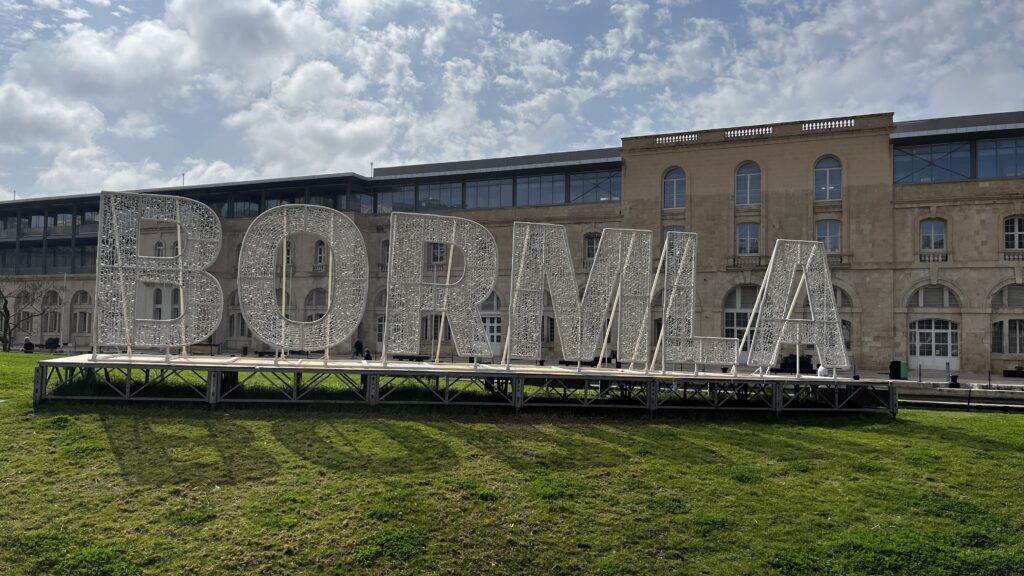
Bormla is the largest and least touristic of the Three Cities. It sits between the other two, wrapped by the Cottonera Lines — the outer ring of fortifications that are among the most complete military walls in Europe. Where Birgu has been curated for visitors, Bormla remains a working Maltese town. The parish church of the Immaculate Conception, rebuilt after wartime damage, dominates the skyline. The local band club — St George’s — and the football team of the same name are central to community life. Feast decorations go up weeks before the parish festa and stay up weeks after.
The town’s most atmospheric spot is the Bonnici Market, a covered market building relocated here in 1860 when Bormla’s original waterfront market was demolished to make way for the expansion of Dock 1. The market square has been used as a film location — Harvey Keitel filmed scenes here for Blood on the Crown in 2021. A flight of steps from Triq Il-Gendus leads directly up to it.
Every Tuesday, the biggest open-air market in Malta stretches for 700 metres beneath the city walls — from near Cafe Riche all the way to Sultan’s Gate. This is not a tourist market. It sells fruit, vegetables, fish, household goods, clothing, and everything else a Maltese family might need. It starts at six in the morning and is largely finished by noon. If you stay in Bormla, the Tuesday market will set the rhythm of your week.
The war damage that Bormla suffered gives it a patchwork quality that the other two cities don’t have. A baroque limestone facade will sit next to a 1950s concrete apartment block. Some people find this jarring. Others find it honest — it tells the story of what happened here more truthfully than a perfectly restored streetscape would. And between the post-war rebuilds, pockets of the old city survive. Magdalena, on the corner of St George Street and Triq Il-Gendus, is one of them — a 19th-century townhouse that came through the bombing intact and has been restored as a holiday home with its original features preserved. For more about the neighbourhood, see the Bormla and Three Cities area guide.
Dock 1, the former naval dockyard at the water’s edge, has been partially converted into a commercial and leisure complex. It hosts occasional events and has a cinema. The waterfront between Bormla and Birgu — a fifteen-minute walk — is one of the most pleasant evening strolls on the island, with views across Dockyard Creek to Senglea on the opposite side. See the location page for a map and directions.
Senglea (Isla)
Senglea is the smallest and quietest of the three. Named after Grand Master Claude de la Sengle, who fortified the peninsula in the 1550s, it occupies a narrow tongue of land between Dockyard Creek and French Creek. During the Great Siege, the Turks attacked Fort St Michael at Senglea’s tip repeatedly but never took it. The town earned the name Civitas Invicta — the Unconquered City.
Today Senglea is almost entirely residential. There is one main street — Triq il-Vittorja — and a handful of side lanes. The Basilica of the Nativity of Our Lady, rebuilt after wartime destruction, anchors the parish. But the real draw is at the tip of the peninsula: the Gardjola Gardens. This small terraced garden offers what many consider the finest panoramic view in Malta — a 270-degree sweep across the Grand Harbour, taking in Valletta’s skyline, Fort St Angelo in Birgu, and the open sea beyond. The gardens’ stone vedette, a carved watchtower with an eye and an ear sculpted into its face (symbolising vigilance), is one of the most recognisable images of Malta.
Come to the Gardjola at sunset. Bring a bottle of wine if you like — you won’t be the only one. The light turns Valletta’s bastions the colour of honey, and the harbour fills with the sound of boat engines heading home. It is one of those places where the view genuinely stops you in your tracks, even if you have seen it before. On the walk back through Senglea’s streets, you pass doorsteps where neighbours sit in the evening air, cats stretched on limestone steps, and the occasional window framing a television showing Italian football. It has a village quality that feels improbable, given that you are ten minutes from a European capital.
Walking the Three Cities
The Three Cities are compact enough to explore entirely on foot, and walking is by far the best way to experience them. Distances are short — Bormla to Birgu is about fifteen minutes along the waterfront, and Senglea is another ten beyond that — but the terrain includes steps, slopes, and uneven stone surfaces. Wear comfortable shoes. Heels are a bad idea here.
The shoreline walk
Start at the Cospicua ferry terminal in Bormla and walk along the waterfront towards Birgu. The path follows Dockyard Creek, passing moored boats, old limestone warehouses, and the marina. Continue past the Vittoriosa yacht marina and around the tip of the peninsula beneath Fort St Angelo. On the far side, the path continues along Kalkara Creek — less developed, quieter, with views across to Bighi, the former Royal Naval Hospital. The full circuit from Bormla to Kalkara and back takes about an hour at a leisurely pace. It is flat, well-paved, and particularly beautiful in the early morning or late afternoon light.
Birgu to Senglea via the upper streets
For a walk that covers more history, start in Birgu’s Collachio — the medieval quarter behind the Inquisitor’s Palace — and work your way through the narrow lanes towards Bormla. Cross through Bormla’s parish square, past the Church of the Immaculate Conception, and continue to Senglea along Triq il-Vittorja. End at the Gardjola Gardens for the sunset view. This route takes you through the heart of all three towns and gives you a feel for how they connect — not as separate places, but as one continuous settlement built around the harbour.
The Cottonera Lines circuit
The outer fortifications — the Cottonera Lines — form a vast arc around all three cities. Walking their full length takes about ninety minutes and covers terrain that is rougher and less visited than the waterfront. Parts of the walls are overgrown, and some sections require scrambling over rubble, but the scale is extraordinary. These walls were designed to withstand a full-scale Ottoman siege, and standing on the bastions, looking down over the rooftops of the Three Cities to the harbour below, you begin to understand why they were never tested — no army wanted to try.

Where to eat and drink
The Three Cities have a food scene that has matured quietly, without the hype or the prices of Valletta’s restaurant quarter. You can eat very well here, and the best places have the kind of atmosphere that comes from serving a local clientele rather than catering to passing tourists.
Restaurants
Terrone occupies a remarkable position inside the walls of Fort St Angelo in Birgu. The setting — candlelit tables beneath ancient stone arches, with the harbour visible through fortification openings — is unlike anything else on the island. The food is Mediterranean-Italian, well-executed, and the wine list is thoughtful. Book ahead, especially on weekends.
Don Berto sits on the Birgu waterfront and is the kind of place where you go for a glass of wine and end up staying for dinner. The menu leans Mediterranean, with good pasta and fresh fish. The harbour-side tables on a warm evening are hard to leave. Service is relaxed — which in the Three Cities means friendly and unhurried, not inattentive.
Enchante, on Juan B. Azzopardi Street in Senglea, is a smaller operation with a short menu that changes regularly. The cooking is careful and flavourful — French-Maltese in spirit — and the prices are fair. It is the kind of restaurant that a neighbourhood is lucky to have, and the locals know it.
Coffee, wine, and pastizzi
Birgi, on St Laurence Street in Birgu, does excellent coffee in a small, carefully designed space. It also serves light breakfasts and pastries. If you are particular about your espresso, this is the place.
Cafe Riche, on P. Boffa Street in Birgu, doubles as a cultural space — it hosts the Sunset Cinema Society and occasional live music. During the day it is a good spot for coffee or a light lunch. In the evening it has an easy, neighbourhood-bar feel that attracts locals and visitors in equal measure.
For pastizzi — the flaky diamond-shaped pastry filled with ricotta or mushy peas that is Malta’s national snack — look for the small bakeries in Bormla and Birgu. They cost well under a euro and are best eaten warm, standing at the counter. No trip to Malta is complete without at least one. Serious pastizzi devotees will tell you the ricotta version is the only real one, but the pea filling has its partisans too.
If you want something more than the Three Cities offer on a given evening, Mercato in Valletta — the renovated food market — is a ten-minute ferry ride away. It has multiple food stalls under one roof, a wine bar, and a terrace. It is excellent for a casual meal before heading back across the harbour.

Getting there and getting around
Ferry from Valletta
The Valletta Ferry Service runs regularly between Valletta’s waterfront and the Cospicua ferry terminal, with the crossing taking about ten minutes. It is by far the easiest and most pleasant way to travel between the two sides of the harbour — faster than the bus, cheaper than a taxi, and with views that never get old. A one-way ticket costs a few euros, and the service runs from early morning until late evening. From the Cospicua terminal, Bormla’s centre is a two-minute walk, Birgu about ten minutes, and Senglea fifteen.
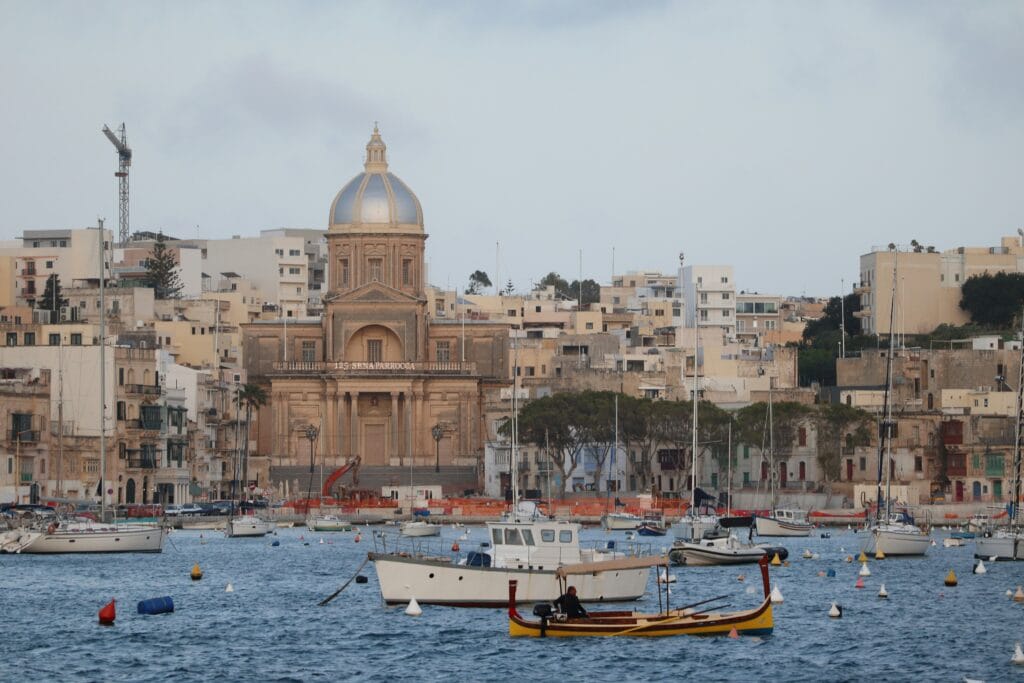
For something more atmospheric, look for the dgħajsa — the traditional painted harbour boat — at the Birgu waterfront. These small boats have been carrying passengers across the Grand Harbour for centuries. The crossing is short, the boats are beautiful, and the experience connects you to a tradition that predates the ferry service by hundreds of years.
Bus
Several bus routes serve the Three Cities, with the main stops in Bormla and near the Birgu waterfront. Route 1, 2, and 3 connect to Valletta (about ten minutes), and other routes reach Marsaxlokk (twenty minutes), the south coast, and the airport (roughly twenty-five minutes). A Tallinja card, available at the airport and major bus terminals, gives you discounted fares and saves queuing for tickets. Buses run frequently during the day but thin out after 9 pm.
Parking and driving
If you arrive by car or rent one for day trips, parking in the Three Cities is significantly easier than in Valletta or Sliema. Bormla has free public parking in the square near the Bonnici Market and along the approach roads. Birgu is tighter — the streets in the old town are barely car-width, and parking near the waterfront fills up on busy evenings. For day-to-day life in the Three Cities, you do not need a car. Everything is walkable, and Valletta is quicker by ferry. A rental car makes sense for day trips to beaches, Gozo, Mdina, or the south coast — but not for getting around locally.
On foot
Walking is the natural way to move through the Three Cities. The distances are short, the streets are full of detail that you miss from a car window, and there is no traffic to speak of once you are inside the fortifications. From the centre of Bormla, you can reach Fort St Angelo in about twenty minutes, the Gardjola Gardens in Senglea in about fifteen, and the Cospicua ferry terminal in two. Carry water in summer — there is limited shade in some stretches, and July and August temperatures regularly exceed 35 degrees.
Where to stay
Accommodation in the Three Cities ranges from boutique hotels in Birgu to self-catering townhouses and apartments in all three towns. Birgu has the most options and the highest prices — particularly along the waterfront and in the Collachio. Senglea has the fewest, with limited holiday rental availability. Bormla sits in the middle: a good range of self-catering properties at prices well below the Valletta and Sliema equivalents, with the advantage of being the best-connected of the three for transport.
For a detailed comparison of the three towns as holiday bases — covering atmosphere, amenities, transport, and what suits different types of travellers — see our guide to where to stay in the Three Cities.
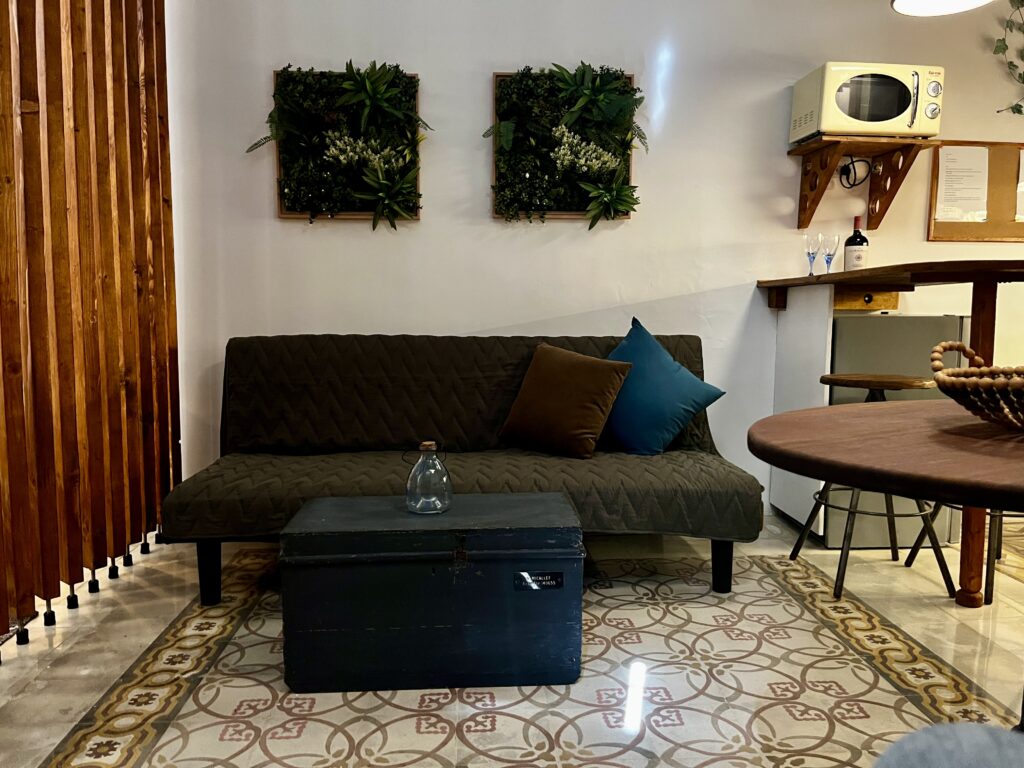
Magdalena is our own restored Maltese townhouse in the heart of Bormla — original limestone walls, hand-hewn timber beams, encaustic tile floors, and all the comforts of a modern holiday home. It sleeps two guests and sits five minutes from the ferry to Valletta. If you value character over chain hotels and want to live inside the real Malta for a few days, it is exactly the kind of place the Three Cities do best. Booking direct gets you the best rate with no platform fees.
Stay at Magdalena in Bormla
A restored traditional Maltese townhouse in the heart of the Three Cities. Book directly with us for the best rate — no platform fees, confirmed within 24 hours.